The city is different on rainy days, sometimes in surprising ways we don't always notice. Light and shadows change their shape. Subway stairs become even more congested than usual as passengers break stride to fight with their umbrellas. Outdoor seating empties out and the doorways in public buildings bustle a bit more.
On first glance, the empty seats in public plazas make these public spaces appear lifeless. It may seem their functions have all been suspended, awaiting the return of better weather. Plazas probably look like fairweather places.
But if you stop for a moment, as you stand in the rain you will see many plazas still serve some use. More often than not, the spaces they form cut corners off the street grid. For everyone rushing to get out of the rain, the plaza is the direct route. Steady streams of fast moving pedestrians course through the plazas.
Of course, as they grip their umbrellas, trying to keep the wind from tearing them inside out, most people hardly notice the shortcut afforded by these little public spaces. They may also be unaware of the effect of the paved surfaces underfoot. Whether they notice or not, the higher quality pavers or flagstones in the plazas provide relief from the drabness of the gray concrete sidewalks, grown darker from soaking in the rain.
On rainy days, plazas do not serve their usual purpose as places to rest or spend time with others. Their aspect changes, but they remain important spaces serving the needs of the public.
Showing posts with label concrete. Show all posts
Wednesday, January 25, 2017
Wednesday, November 23, 2016
Dashed Expectations
Occasionally, a building defies your expectations. This is something we celebrate when the architect's craft creates an unexpected sensation that delights or provokes us. When it appears to be accidental, we tend to just shrug and shuffle along. Yet there may still be an opportunity to consider the possibilities created by our false expectations.


Tuesday, July 26, 2016
Fantastical Streetscape
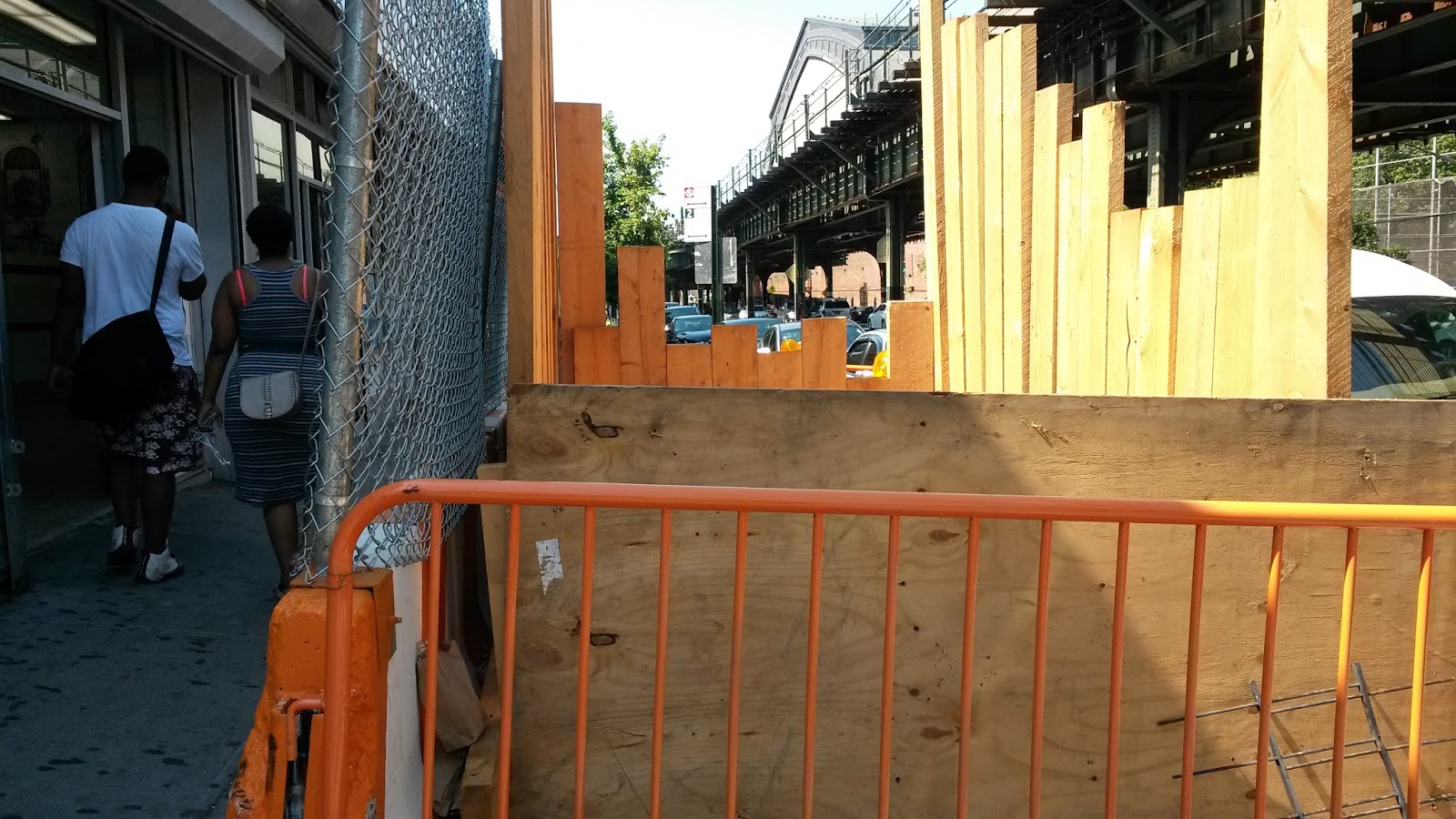
A miniature palisade suddenly rises. Natural wooden hues thrust upward from the sidewalk, warmly reflecting the summer sun. A few days later, it will be gone. This will once again be a regular stretch of sidewalk; the concrete will just be a little lighter gray.
Infrastructure projects often give rise to temporary streetscapes that can be as fantastical as they are disruptive. Consider this excavation site to repair an old pipe.
On the intersection side, there is a plywood sheet that is slipped in and out to gain access to the pit. The taller passersby who are curious can get a view of the hole that has been dug out on the other side.

Infrastructure projects often give rise to temporary streetscapes that can be as fantastical as they are disruptive. Consider this excavation site to repair an old pipe.
The design is entirely utilitarian. At the same time, it is coherent and creates a level of visual interest. The vertical lines of the rough-cut planks with irregular heights catch the eye and draw it down.
The orange and white construction barriers, of various sorts, step out at a lower level, creating a layered space. It is reminiscent of a base or outer rampart. Constraining the sidewalk width accentuates the height of the planks.

Within is a fleeting glimpse of a large, time-encrusted pipe. This is just one of innumerable pieces of infrastructure that have been invisibly running below our feet since long before we were born. All the busy activities we see in our daily lives share the street with these massive public works below. It makes you wonder about the possibilities of adding a little design effort to these temporary sites.
Friday, July 8, 2016
Concrete Marks
The urban ecosystem leaves concrete marks on our built environment. In some cases, the imprints of natural materials brought into the city are a deliberate design feature, like the exposed wood grain textures left by formwork on brutalist architecture. Other times, the flora and fauna that share the streets with us force themselves onto our constructions to leave their marks. These frozen traces of the fleeting nature we often overlook in our bustling lives can make spaces richer, more interesting places. They can make you stop and take notice, if only for a moment.
Subscribe to:
Posts (Atom)